About Boys Don't Cry
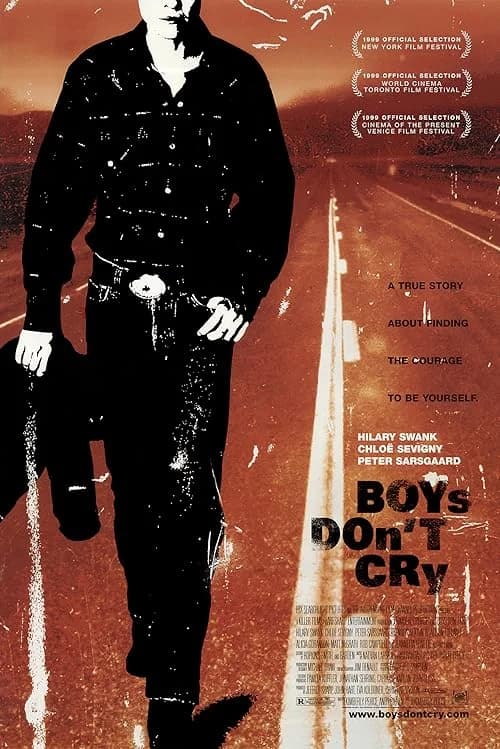
Boys Don't Cry (1999) stands as one of the most powerful and heartbreaking biographical dramas ever made. Directed with remarkable sensitivity by Kimberly Peirce, the film tells the true story of Brandon Teena, a young transgender man who moves to rural Nebraska in search of acceptance and love. The narrative follows Brandon as he forms relationships with a group of locals, including Lana, played with devastating authenticity by Chloë Sevigny, while concealing his assigned female birth sex.
Hilary Swank delivers a career-defining, Oscar-winning performance as Brandon, capturing both his charismatic bravado and vulnerable humanity with extraordinary nuance. Her transformation is not merely physical but deeply emotional, creating a portrait that remains profoundly moving decades later. The supporting cast, particularly Sevigny and Peter Sarsgaard as the menacing John Lotter, provide complex counterpoints that highlight the film's exploration of gender, violence, and community.
What makes Boys Don't Cry essential viewing is its unflinching yet compassionate approach to its subject matter. Peirce's direction avoids sensationalism, instead focusing on Brandon's humanity and the tragic consequences of prejudice. The film's raw emotional power comes from its intimate portrayal of a person simply trying to live authentically in a world determined to deny his identity. While difficult to watch at times, it remains a crucial work of American cinema that sparked important conversations about transgender representation. Viewers should watch this film not only for its historical significance and superb performances but for its enduring message about the courage required to be oneself against impossible odds.
Hilary Swank delivers a career-defining, Oscar-winning performance as Brandon, capturing both his charismatic bravado and vulnerable humanity with extraordinary nuance. Her transformation is not merely physical but deeply emotional, creating a portrait that remains profoundly moving decades later. The supporting cast, particularly Sevigny and Peter Sarsgaard as the menacing John Lotter, provide complex counterpoints that highlight the film's exploration of gender, violence, and community.
What makes Boys Don't Cry essential viewing is its unflinching yet compassionate approach to its subject matter. Peirce's direction avoids sensationalism, instead focusing on Brandon's humanity and the tragic consequences of prejudice. The film's raw emotional power comes from its intimate portrayal of a person simply trying to live authentically in a world determined to deny his identity. While difficult to watch at times, it remains a crucial work of American cinema that sparked important conversations about transgender representation. Viewers should watch this film not only for its historical significance and superb performances but for its enduring message about the courage required to be oneself against impossible odds.