About Double Indemnity
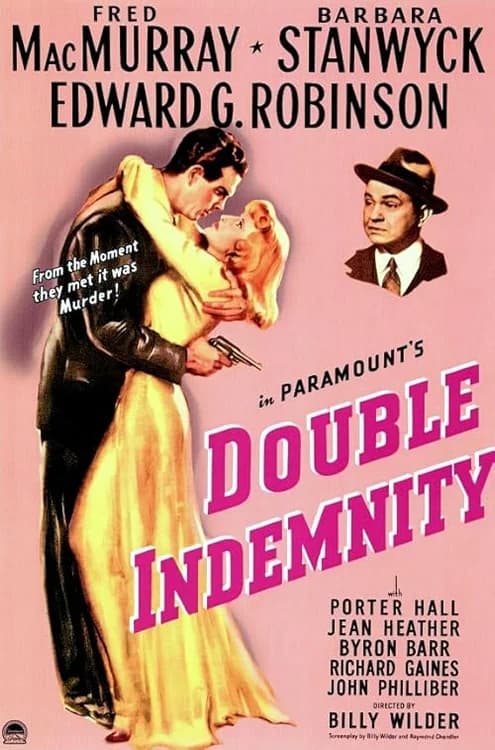
Billy Wilder's 1944 masterpiece 'Double Indemnity' stands as one of the defining works of film noir, weaving a tale of lust, greed, and inevitable downfall that continues to captivate audiences eight decades later. The film follows insurance salesman Walter Neff (Fred MacMurray), who falls under the spell of the calculating Phyllis Dietrichson (Barbara Stanwyck). Seduced by both her charms and the promise of easy money, Neff conspires with Phyllis to murder her husband and collect on a life insurance policy with a double indemnity clause.
The brilliance of 'Double Indemnity' lies in its taut execution and morally complex characters. Stanwyck delivers a career-defining performance as the quintessential femme fatale, her anklet becoming one of cinema's most iconic symbols of seduction. MacMurray, typically cast in lighter roles, reveals remarkable depth as the doomed Neff, whose voiceover narration establishes the film's fatalistic tone from the opening scene. Edward G. Robinson provides crucial moral counterpoint as Barton Keyes, the claims investigator whose dogged pursuit of truth creates unbearable tension.
Wilder's direction, combined with John F. Seitz's shadow-drenched cinematography, creates a visual language that would influence countless noir films to come. The screenplay, co-written by Wilder and Raymond Chandler, crackles with sharp dialogue and psychological insight. Viewers should watch 'Double Indemnity' not just as a historical artifact, but as a perfectly constructed thriller that explores timeless themes of temptation, corruption, and the inescapable consequences of our choices. Its influence on crime cinema remains profound, making it essential viewing for any film enthusiast.
The brilliance of 'Double Indemnity' lies in its taut execution and morally complex characters. Stanwyck delivers a career-defining performance as the quintessential femme fatale, her anklet becoming one of cinema's most iconic symbols of seduction. MacMurray, typically cast in lighter roles, reveals remarkable depth as the doomed Neff, whose voiceover narration establishes the film's fatalistic tone from the opening scene. Edward G. Robinson provides crucial moral counterpoint as Barton Keyes, the claims investigator whose dogged pursuit of truth creates unbearable tension.
Wilder's direction, combined with John F. Seitz's shadow-drenched cinematography, creates a visual language that would influence countless noir films to come. The screenplay, co-written by Wilder and Raymond Chandler, crackles with sharp dialogue and psychological insight. Viewers should watch 'Double Indemnity' not just as a historical artifact, but as a perfectly constructed thriller that explores timeless themes of temptation, corruption, and the inescapable consequences of our choices. Its influence on crime cinema remains profound, making it essential viewing for any film enthusiast.